
Sheet Metal Laser Cutting Machine: Applications, Benefits and Key Considerations
What Is a Sheet Metal Laser Cutting Machine?
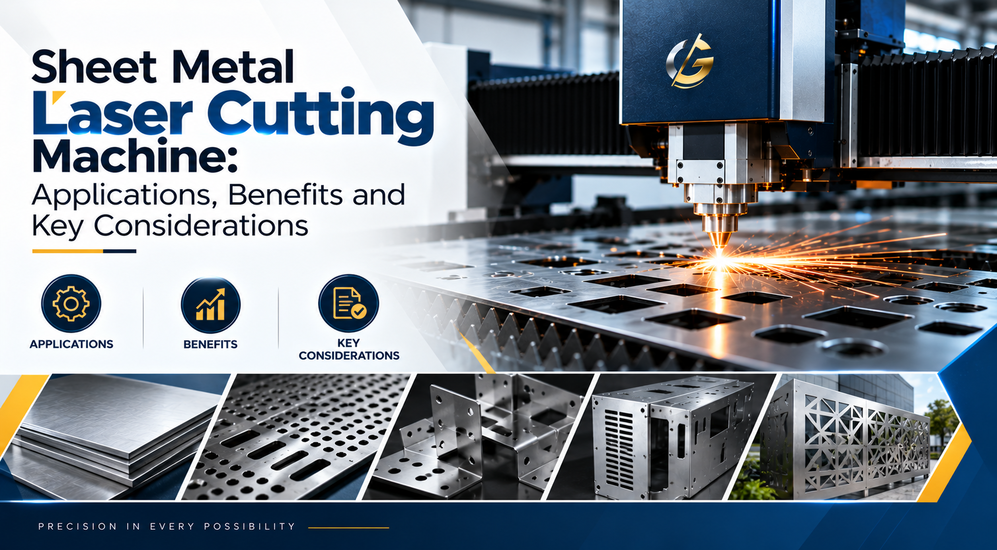
A sheet metal laser cutting machine uses a focused laser beam to cut metal sheets according to a programmed design. CNC control allows the machine to follow the required cutting path and produce components with consistent dimensions.
Today, fiber laser technology is widely used for sheet metal processing because it can support a range of industrial manufacturing and fabrication requirements.
The actual cutting performance depends on factors such as material type, thickness, laser power, cutting parameters and machine configuration.
How Does Sheet Metal Laser Cutting Work?
The process starts with a digital component design. The CNC system converts the design into cutting instructions for the machine.
During cutting:
- The metal sheet is positioned on the machine.
- The cutting head moves according to the programmed path.
- The focused laser beam heats and cuts the material.
- Assist gas helps remove molten material from the cutting area.
- The finished component is separated from the sheet.
Proper machine settings are important for achieving consistent cutting quality.
Materials Used in Sheet Metal Laser Cutting
Sheet metal laser cutting can be used for different metal-processing applications.
Common materials include:
- Mild steel
- Stainless steel
- Other suitable metals depending on machine configuration
The appropriate laser power and cutting parameters depend on the material and thickness being processed.
For manufacturers, it is useful to identify the materials they regularly cut before selecting a machine.
Applications of Sheet Metal Laser Cutting
A sheet metal laser cutting machine can support production across several industries.
1. Automotive Components
Automotive and auto-component manufacturers require accurately produced metal parts for different assemblies.
Laser cutting can be used for brackets, panels, structural components and other fabricated parts.
Consistent cutting is particularly useful when manufacturers produce repeated components in batches.
2. Industrial Machinery
Industrial equipment manufacturers often require custom metal components based on engineering drawings.
Laser cutting can produce:
- Machine panels
- Brackets
- Frames
- Covers
- Structural components
- Custom machine parts
The CNC-controlled process can help maintain repeatability across multiple components.
3. General Metal Fabrication
Metal fabrication companies handle different component designs and production quantities.
A fiber laser cutting system can support fabrication work involving:
- Plates
- Panels
- Brackets
- Frames
- Profiles
- Custom components
This flexibility makes laser cutting useful for both standard production and application-specific fabrication.
4. Construction Equipment
Construction equipment manufacturers work with structural and fabricated metal components.
Laser cutting can be incorporated into the production of machine parts, brackets, frames and other components, depending on material and thickness requirements.
5. Furniture Manufacturing
Metal furniture manufacturers can use laser cutting to create accurately shaped components for tables, chairs, storage systems and furniture frames.
The process can also support different designs without requiring extensive tooling changes for every component.
6. Agricultural Machinery
Agricultural equipment includes many fabricated metal components that require accurate dimensions.
Laser cutting can support the production of brackets, frames, machine parts and other components used in agricultural machinery.
Benefits of Sheet Metal Laser Cutting
Precise Cutting
A focused laser beam can produce detailed cutting paths and accurate component shapes when the machine is correctly configured.
Repeatable Production
CNC control allows the same cutting program to be repeated for multiple components.
This can be useful for batch manufacturing where consistent dimensions are required.
Flexible Component Design
Laser cutting can process different shapes and designs based on digital drawings. This makes it suitable for manufacturers handling multiple component designs.
Reduced Tooling Requirements
Unlike some traditional cutting processes, laser cutting does not require a dedicated physical cutting tool for every component design.
This can make design changes and different production requirements easier to manage.
Suitable for Different Industries
From automotive components to industrial machinery and fabrication, laser cutting can support a wide range of metal-processing applications.
What Should You Consider Before Buying a Sheet Metal Laser Cutting Machine?
Choosing a machine should start with the actual production requirement.
Material and Thickness
Identify the materials you regularly process and the thickness range required for production.
Laser Power
Laser power should match the materials and thicknesses you need to cut. Higher power is not automatically the right choice for every application.
Working Area
Consider the sheet dimensions you normally process.
A machine with an appropriate working area can help reduce unnecessary material handling and production limitations.
Production Volume
A machine used for occasional fabrication may have different requirements from one used for continuous industrial production.
Consider your expected production volume before selecting the configuration.
Cutting Requirements
Think about the component shapes, hole sizes, cutting details and dimensional requirements involved in your production.
Automation
For higher production volumes, loading and unloading systems can become an important part of the overall machine setup.
Fiber Laser for Sheet Metal Processing
Fiber laser technology has become an important option for modern sheet metal processing.
The technology can support applications requiring precise metal cutting, repeatable production and flexible component designs.
However, machine performance depends on the complete system—not just the laser source. Cutting head, CNC control, motion system, assist gas, machine structure and operating parameters all contribute to the final result.
Sheet Metal Laser Cutting for Industrial Production
Different industries have different production requirements.
For example, an automotive component manufacturer may focus on repeatable batch production, while a fabrication company may need flexibility for different component designs.
Similarly, heavy engineering applications may require a machine configuration suited to larger or thicker workpieces.
Therefore, manufacturers should evaluate the machine based on their actual production process.
Sheet Cutting vs Pipe and Profile Cutting
Not every laser cutting requirement involves flat sheets.
Manufacturers working with pipes and structural profiles may require a dedicated pipe and profile cutting solution.
Depending on the machine configuration, dedicated fiber laser pipe cutting machines can process:
- Round pipes
- Square pipes
- Rectangular tubes
- I-beams
- L-angles
For manufacturers handling both sheet and tubular materials, the decision should be based on the type and volume of work they process regularly.
Sheet Metal Laser Cutting Solutions by Genesys Lasers
Genesys Lasers develops laser cutting solutions for industrial manufacturing requirements.
Its fiber laser machine solutions can be considered for different metal-processing applications, while its dedicated pipe cutting machines are designed for tubular and structural profile processing.
For manufacturers evaluating a laser cutting system, the machine configuration should be matched with the required material, thickness, component size and production volume.
Practical Checklist Before Machine Selection
Before discussing a sheet metal laser cutting machine for your production, keep these details ready:
- Material type
- Regular material thickness
- Maximum material thickness
- Sheet dimensions
- Required production volume
- Component dimensions
- Cutting accuracy requirements
- Automation requirements
- Future production plans
Having these details ready can make technical discussions and machine evaluation more straightforward.
Conclusion
A sheet metal laser cutting machine can support a wide range of manufacturing and fabrication applications. Automotive components, industrial machinery, construction equipment, furniture, agricultural machinery and general fabrication can all benefit from laser cutting when the machine configuration matches the application.
The right machine depends on more than laser power. Material, thickness, working area, production volume, component design and automation requirements should all be considered before making a machine selection.
For industrial manufacturers, starting with the actual production requirement is the most practical way to evaluate a laser cutting solution.
FAQs
What is a sheet metal laser cutting machine?
It is a CNC-controlled machine that uses a focused laser beam to cut metal sheets according to programmed designs.
What materials can be cut with a sheet metal laser?
Depending on the machine configuration, common applications include mild steel and stainless steel. Material and thickness capabilities vary between systems.
Is fiber laser suitable for sheet metal cutting?
Yes. Fiber laser technology is widely used for industrial sheet metal processing, with the appropriate machine configuration and cutting parameters.
What industries use sheet metal laser cutting?
Automotive, engineering, fabrication, construction equipment, furniture and agricultural machinery are among the industries that can use sheet metal laser cutting.
How do I select the right sheet metal laser machine?
Start by evaluating your material, thickness, sheet size, production volume, component requirements and future production needs.