
Sheet Metal Fabrication Business: Investment, Setup and Growth Potential
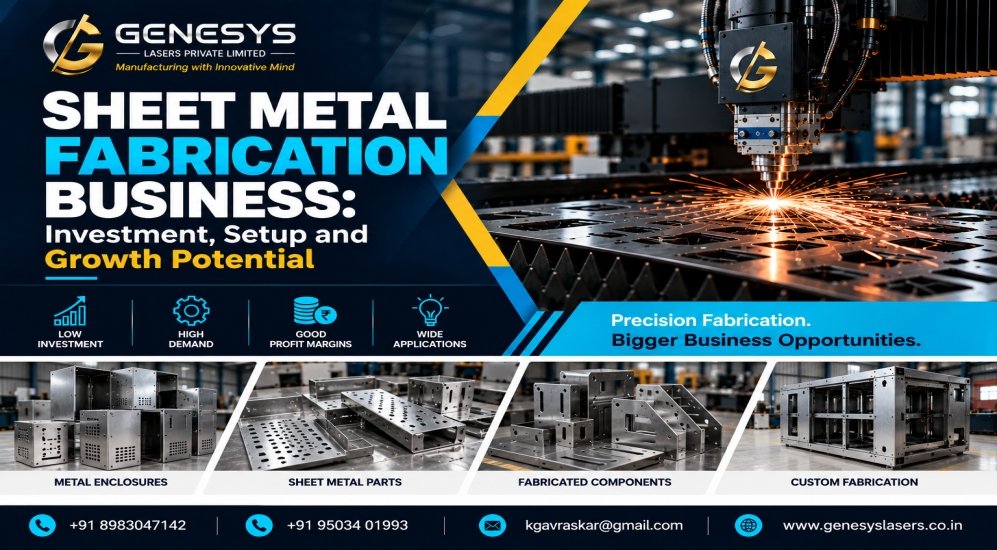
Starting a sheet metal fabrication business in India can be an opportunity for entrepreneurs interested in the manufacturing industry. From electrical panels and industrial machinery to construction equipment and automotive parts, many industries depend on accurately fabricated metal components.
For entrepreneurs interested in manufacturing, starting a sheet metal fabrication business can be an opportunity to serve these industries. However, success depends on more than purchasing machines. You need to understand the local market, choose the right equipment, manage production costs and build relationships with customers.
If you are planning to start a sheet metal fabrication business in India, this guide explains the key investment areas, setup requirements, equipment options and factors that can influence business growth.
1. What Is a Sheet Metal Fabrication Business?
A sheet metal fabrication business converts flat metal sheets into components or finished products according to customer requirements.
The process may involve cutting, bending, drilling, welding, assembling and finishing. The exact operations depend on the products being manufactured and the services offered by the workshop.
Some businesses work on a job work basis, processing components supplied by customers. Others manufacture finished products under their own brand or produce components for industrial clients.
Common products include:
Electrical panels and enclosures
Industrial machine covers
Metal brackets and mounting plates
Sheet metal cabinets
HVAC ducts and fittings
Metal furniture components
Equipment housings and fabricated assemblies
Before starting, decide whether you want to focus on job work, custom fabrication or manufacturing your own products. This decision will influence your machinery, workspace, staffing and investment requirements.
2. Research the Market Before Investing
One of the first steps is understanding which customers need fabrication services in your target area.
Industrial estates and manufacturing clusters may offer opportunities, but demand varies by location and industry. Do not assume that every industrial area has enough work for a new business.
Start by identifying potential customers such as:
Engineering and manufacturing companies
Electrical panel manufacturers
Construction equipment suppliers
HVAC contractors
Industrial machinery manufacturers
Existing fabrication workshops
Speak with potential customers to understand the materials they use, the components they require, their order quantities and whether they outsource fabrication work.
Also study competing businesses. Find out which services they offer, what types of jobs they specialise in and where customers may be experiencing delays or quality issues.
This research can help you identify a practical starting point rather than investing in equipment without a clear customer base.
3. What Investment Is Required to Start a Fabrication Business?
The total investment depends on the size of your workshop, the equipment you purchase, the products you manufacture and the level of automation you need.
A small fabrication workshop and a larger industrial manufacturing unit will have different financial requirements. Instead of relying on a general investment estimate, prepare a detailed budget based on your business model.
Workshop and industrial space
You will need sufficient space for machinery, raw material storage, finished products and safe movement of components.
Consider the location, rent or purchase cost, loading access, electrical supply, ventilation and other infrastructure requirements.
Your workshop layout should allow materials to move through each production stage without unnecessary handling or delays.
Machinery and equipment
The equipment required depends on the services you plan to provide.
A fabrication workshop may need some combination of:
Sheet metal cutting equipment
CNC bending or press brake machines
Welding machines
Drilling and grinding equipment
Material handling equipment
Measuring and inspection tools
Not every business needs to purchase all these machines at the beginning. Some processes may be outsourced until customer demand justifies bringing them in-house.
Raw materials and consumables
Your budget should account for sheet metal, welding consumables, cutting consumables, finishing materials and other items used during production.
If you manufacture products using your own materials, you may need additional working capital to purchase stock before receiving customer payments.
Staff and training
Depending on the scale of your business, you may need machine operators, welders, fabrication workers, quality inspection staff and administrative support.
Employees should understand the equipment they operate and follow appropriate workplace safety procedures.
Working capital
Working capital covers ongoing expenses such as salaries, electricity, rent, raw materials, maintenance, transportation and other operating costs.
It is especially important when customers pay after delivery or when orders require you to purchase materials in advance.
Keep your setup budget separate from your monthly operating budget so that you understand the full financial commitment.
4. Which Machines Are Needed for Sheet Metal Fabrication?
Choosing equipment is one of the most important decisions when setting up a fabrication workshop.
The right machinery depends on the material thickness, component dimensions, production volume and accuracy required by your customers.
Laser cutting machine
A laser cutting machine can be used to cut sheet metal into specific shapes and dimensions. It may be useful for workshops that need accurate profiles, detailed designs or repeatable cutting results.
A fiber laser cutting machine is one option worth evaluating for metal sheet processing. Before selecting a configuration, review the materials, thickness range, working area and production requirements of your intended jobs.
CNC bending machine
After cutting, some components need bending to create the required shape. A press brake or CNC bending machine may be necessary when your business handles enclosures, cabinets, brackets or other formed components.
Welding equipment
Welding equipment is used to join metal parts and create assemblies. The appropriate equipment depends on the material, joint design, required strength and production process.
Supporting equipment
Depending on your workflow, you may also require drilling tools, grinders, cutting tools, measuring equipment and material handling systems.
Before purchasing machinery, compare the cost of buying equipment with the cost of outsourcing certain operations. Start with the processes that customers require most frequently and expand as demand grows.
5. How Can a Laser Cutting Machine Improve Fabrication Work?
Cutting is an important stage in many sheet metal fabrication processes. The quality and consistency of the cut components can affect the subsequent bending, welding and assembly stages.
A suitable laser cutting machine may help a fabrication business with:
Design flexibility: Digital cutting programs can support a variety of component shapes and designs.
Repeatability: Once a job is properly programmed and set up, repeat orders can be processed according to the same specifications, subject to appropriate controls.
Production planning: CNC-based processing can make it easier to organise repeat jobs and manage cutting schedules.
Integration with other processes: Cut components can move to bending, welding or assembly when the workshop has a suitable production workflow.
However, actual performance depends on machine configuration, material, thickness, cutting parameters, operator skill and maintenance. A laser cutting machine should be selected according to your production requirements rather than its specifications alone.
You can explore the Genesys Lasers Fiber Laser Cutting Machine to review a machine option for metal cutting applications.
6. How Does a Sheet Metal Fabrication Business Earn Revenue?
A fabrication business can earn revenue through several business models.
Job work services
You process components or perform fabrication operations for other businesses. Depending on the agreement, customers may supply the material or ask you to source it.
Custom fabrication
You manufacture products according to drawings, dimensions and specifications provided by customers.
Finished product manufacturing
You produce standard or customised products and sell them directly to businesses or distributors.
Contract manufacturing
You manufacture components or assemblies for customers on an ongoing basis. These arrangements may provide more predictable demand when order volumes and payment terms are agreed clearly.
Each model has different requirements. Job work may reduce the need to develop your own product range, while finished product manufacturing may require more work on design, stock, sales and distribution.
Choose a model that matches your experience, available resources and access to customers.
7. What Affects Profitability in Sheet Metal Fabrication?
There is no single profit margin that applies to every fabrication business. Financial performance depends on the work you undertake and how effectively you manage costs.
Material costs
Metal prices and material wastage can affect the cost of every order. Accurate estimation, sensible stock management and efficient cutting layouts can help control expenses.
Labour and production time
Complex components may require more cutting, bending, welding, finishing and inspection time. Estimate the time needed for each stage before quoting.
Machine utilisation
Machinery contributes to business expenses even when it is idle. A consistent pipeline of suitable orders can help make better use of available production capacity.
Rework and quality issues
Incorrect dimensions, poor welding or unsuitable finishing can lead to rework and additional costs. Quality checks at the appropriate stages help identify problems before they affect the entire order.
Pricing and payment terms
Your quotations should account for materials, labour, machine operating costs, overheads, finishing and delivery where applicable. Payment terms also matter because delayed collections can create cash flow pressure.
Prepare financial projections using realistic assumptions. Avoid making investment decisions based only on optimistic sales or profit estimates.
8. How to Find Customers for a Fabrication Business
Customer acquisition should be part of your business plan from the beginning.
Connect with industrial businesses
Identify manufacturers and contractors who use fabricated components. Visit industrial areas, introduce your services and speak with purchasing or production teams.
Develop relationships with other workshops
Some fabrication companies outsource cutting, bending, welding or specialised operations when their own capacity is limited. Building dependable relationships can create opportunities for repeat work.
Create a professional online presence
A business website can showcase your capabilities, machinery, products, service area and contact details. Use genuine project photographs where possible and explain how customers can request a quotation.
Use local search and business listings
Maintain accurate business information on relevant online directories and Google Business Profile, if eligible. This can help customers searching for fabrication services in your area find your business.
Focus on quality and delivery
Industrial customers often need suppliers who can meet specifications and deliver within agreed timelines. Clear communication, consistent workmanship and realistic commitments can help build trust.
Instead of targeting every industry, begin with customer segments that match your equipment and production capacity.
9. Common Mistakes to Avoid
Before launching your fabrication business, pay attention to these common challenges.
Investing before validating demand: Speak with potential customers and understand their actual requirements before buying machinery.
Purchasing too much equipment at once: Start with the processes that fit your business model and evaluate expansion as demand develops.
Underestimating operating costs: Account for labour, utilities, consumables, rent, maintenance and working capital.
Ignoring workplace safety: Provide suitable training, protective equipment and safe operating procedures for the processes performed in your workshop.
Accepting jobs without proper costing: Review drawings, quantities, material specifications and delivery requirements before submitting a quotation.
Depending on a single customer: Build relationships with multiple businesses to reduce the impact of changes in one customer’s orders.
Neglecting quality checks: Establish inspection procedures appropriate to the components you manufacture.
10. How Can a Fabrication Business Grow?
Once your business has a stable customer base, you can explore ways to expand.
You may add machinery for processes that are frequently outsourced, increase production capacity or specialise in a particular industry.
For example, a workshop that initially handles cutting and basic fabrication may later add bending, welding or assembly services if customers need these operations regularly.
Other growth opportunities include improving production planning, reducing material wastage, documenting quality procedures and developing longer-term relationships with industrial customers.
Growth should be based on actual demand and financial capacity. Purchasing additional machinery before securing enough work can increase expenses without improving business performance.
Frequently Asked Questions
1. Is sheet metal fabrication a good business to start in India?
It may be a suitable opportunity for entrepreneurs who understand manufacturing requirements and can identify customers for their services. Market demand, competition, operating costs and production capabilities should be evaluated before investing.
2. How much investment is required to start a sheet metal fabrication business?
The investment depends on your workshop size, machinery, infrastructure, materials, staffing and working capital. Prepare a detailed budget using equipment quotations and realistic operating expenses.
3. Which machines are required for sheet metal fabrication?
Depending on the products and services offered, a workshop may require cutting equipment, bending machines, welding equipment, drilling tools and inspection instruments. The exact requirements depend on the work you plan to handle.
4. Can a fabrication business start with laser cutting services only?
Yes, a business can focus on laser cutting job work if there is sufficient demand for that service. Other operations can be outsourced initially or added later when customer requirements justify the investment.
5. How can I get customers for my fabrication business?
Connect with local manufacturers, engineering companies, contractors and other fabrication workshops. A professional website, local business listings, referrals and direct industrial outreach can also help generate enquiries.
6. How can I improve the profitability of my fabrication business?
Accurate job costing, efficient material usage, reduced rework, reliable delivery and suitable machine utilisation can support better financial performance. Actual results depend on the business model and market conditions.
Conclusion
Starting a sheet metal fabrication business requires a clear understanding of your customers, production processes and financial commitments. Choosing suitable machinery is important, but market research, accurate costing and consistent quality are equally necessary.
Begin by identifying the products or services that local businesses need. Prepare a realistic budget, compare equipment options and build a plan for securing regular orders before making a major investment.
If you are evaluating laser cutting equipment for your fabrication setup, Genesys Lasers can help you explore machine options based on your material requirements and production goals.
To discuss your requirements, contact Genesys Lasers.