
Fiber Laser Cutting Machine Applications in Modern Industries
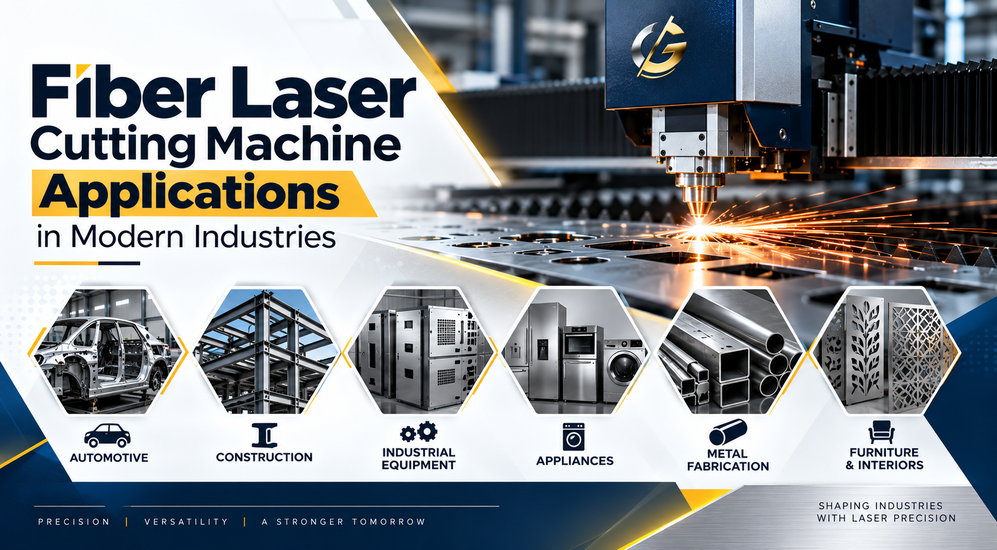
Fiber laser cutting applications have expanded across many manufacturing and engineering industries.
Manufacturers use fiber laser cutting machines to process metal components with speed, precision and repeatability.From automotive components and structural fabrication to agricultural machinery and heavy engineering, laser cutting can support different production requirements depending on the material, thickness, component design and production volume.But where does fiber laser cutting actually make a difference? Let’s look at some of the major industrial applications.
1. Automotive and Auto Component Manufacturing
The automotive industry requires accurate metal components with consistent dimensions and clean cutting.A fiber laser cutting machine can be used for components manufactured from materials such as mild steel and stainless steel. Manufacturers can use laser cutting for brackets, panels, structural parts and other fabricated components.For automotive production, important considerations include:
- Cutting accuracy
- Repeatability
- Production speed
- Material thickness
- Component design
- Consistent cutting quality
These factors make laser cutting useful for both production and component fabrication.
2. Structural Fabrication
Structural fabrication involves the production of metal structures, frames and supporting components. It often requires cutting different shapes and sizes according to engineering drawings.Fiber laser cutting can process materials used in structural fabrication and create precise profiles for further welding and assembly.Depending on the machine configuration, applications can include:
- Structural components
- Metal frames
- Support structures
- Fabricated assemblies
- Plates and profiles
Accurate cutting can also reduce additional finishing work during fabrication.
3. Construction Equipment Manufacturing
Construction equipment manufacturers work with heavy-duty metal components that require reliable processing.Fiber laser cutting can help manufacturers produce accurately cut parts for construction machinery and equipment.The application may include:
- Machine components
- Structural parts
- Brackets
- Frames
- Custom fabricated parts
The right laser power and machine configuration depend on the material type, thickness and production requirements.
4. Furniture Manufacturing
Modern metal furniture manufacturing requires clean shapes, accurate dimensions and repeatable production.Laser cutting can be used to manufacture components for:
- Metal tables
- Chairs
- Storage systems
- Office furniture
- Furniture frames
- Decorative metal parts
For furniture manufacturers, the ability to produce different component designs without extensive tooling can be useful when handling multiple product variations.
5. Agricultural Machinery
Agricultural equipment manufacturers produce machines and components that need durable metal structures.Fiber laser cutting applications in this sector can include components for:
- Agricultural machinery
- Equipment frames
- Machine brackets
- Structural components
- Fabricated parts
Laser cutting allows manufacturers to create repeatable component profiles that can move into welding, bending and assembly processes.
6. Heavy Engineering
Heavy engineering involves a wide range of components, materials and production requirements.Fiber laser cutting can support the production of accurately cut metal parts used in engineering equipment and industrial machinery.Applications may include:
- Machine components
- Structural parts
- Industrial equipment
- Fabricated assemblies
- Custom engineering components
The appropriate machine configuration depends on the required material, thickness, component dimensions and production volume.
7. General Metal Fabrication
Metal fabrication is one of the broadest areas for fiber laser cutting applications.Fabricators may process different materials and component designs for multiple industries. A fiber laser cutting machine can support jobs that require repeatable profiles, precise dimensions and efficient material processing.Typical fabrication work may include:
- Brackets
- Panels
- Frames
- Plates
- Machine parts
- Custom components
This flexibility makes fiber laser technology suitable for both standard and application-specific production.
8. Pipe, Tube and Profile Processing
Fiber laser technology is not limited to flat sheet metal.Dedicated pipe and profile laser cutting machines can process different tubular and structural profiles. Depending on the machine configuration, applications can include:
- Round pipes
- Square pipes
- Rectangular tubes
- I-beams
- L-angles
These machines can be useful for industries that regularly process long or heavy tubular workpieces.For dedicated pipe processing, manufacturers should consider chuck size, processing length, material type and production volume before selecting a machine.
9. Why Applications Matter When Selecting a Laser Machine
Not every manufacturer has the same cutting requirements.A machine designed for small sheet-metal components may not be suitable for long pipes or heavy structural profiles. Similarly, a high-volume production line may require a different configuration from a job-shop environment.Before selecting a machine, consider:
- Material type
- Material thickness
- Component dimensions
- Production volume
- Required cutting speed
- Sheet or profile size
- Automation requirements
- Future production requirements
Understanding the actual application helps manufacturers choose a machine configuration that fits their production process.
10. Application-Specific Laser Machine Design
Different industries can have very different production challenges. Because of this, application-specific machine development can be important when standard configurations do not fully match a production requirement.Genesys Lasers develops laser cutting solutions with a focus on application requirements and industrial production needs.Its dedicated fiber laser pipe cutting machines are designed for applications involving different pipe and profile formats. Depending on the configuration, the machines can support round pipes, square pipes, rectangular tubes, I-beams and L-angles.This approach allows machine configuration to be considered around the workpiece, production requirement and intended application rather than focusing only on laser power.
Fiber Laser Cutting Applications: What Manufacturers Should Consider
Before investing in a fiber laser cutting machine, manufacturers should clearly define what they need to cut and how frequently they need to produce it.A practical evaluation should include:Material: Mild steel, stainless steel or other supported materials.Thickness: Determine the regular and maximum thickness requirements.Component size: Consider the dimensions of the parts being produced.Production volume: Identify whether the machine will handle prototype, batch or high-volume production.Machine type: Decide whether the requirement is for sheet cutting, pipe cutting, profile cutting or a combination.Future requirements: Consider expected changes in products and production volumes.A clear understanding of these factors can make machine selection more practical and production-focused.
Conclusion
Fiber laser cutting applications now cover a wide range of industrial manufacturing requirements. Automotive components, structural fabrication, construction equipment, furniture, agricultural machinery, heavy engineering and general metal fabrication can all use laser cutting depending on their specific production needs.The right machine, however, depends on the application. Material, thickness, component size, production volume and machine configuration all play an important role.For manufacturers evaluating a fiber laser cutting solution, understanding the application first is a practical starting point.
Frequently Asked Questions
What industries use fiber laser cutting machines?
Fiber laser cutting machines are used across automotive, structural fabrication, construction equipment, furniture, agricultural machinery, heavy engineering and general metal fabrication.
What materials can fiber laser machines cut?
Applications commonly include materials such as mild steel and stainless steel. The suitable material range depends on the specific machine configuration and laser system.
Can fiber laser machines cut pipes and tubes?
Yes. Dedicated fiber laser pipe cutting machines are designed to process tubular and structural profiles such as round pipes, square pipes, rectangular tubes, I-beams and L-angles.
How do I choose a fiber laser cutting machine for my application?
Start with the material, thickness, component size, production volume and required machine type. These factors help determine the appropriate machine configuration.
Are fiber laser cutting machines suitable for high-volume production?
They can be used for high-volume industrial production when the machine configuration, laser power, automation and material-processing requirements are suitable for the application.