
Laser Cutting Job Work Business: Profitability, Investment and Opportunities
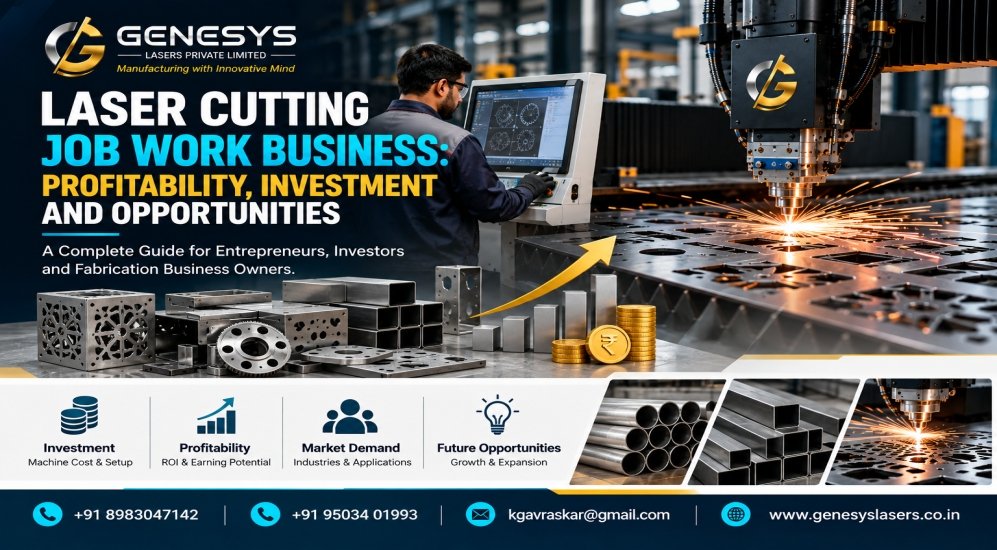
Not every manufacturing company has its own laser cutting machine. Many businesses receive orders for metal components but prefer to outsource the cutting work instead of investing in expensive equipment themselves. This creates an opportunity for entrepreneurs who want to start a laser cutting job work business.
In this business, you provide laser cutting services to other companies. Customers share their drawings and material requirements, and you process the components according to their specifications.
It sounds straightforward, but running a profitable job work unit requires careful planning. You need to understand your local market, choose the right machine, calculate your operating costs and build relationships with customers who need regular cutting services.
If you are considering starting a laser cutting job work business in India, here are the key things to understand before investing.
1. What Is a Laser Cutting Job Work Business?
A laser cutting job work business provides cutting services to companies that need metal components for their products or projects.
For example, an electrical panel manufacturer may need hundreds of sheet metal parts for an upcoming order. Instead of buying a laser cutting machine, the company can send its drawings to a job work unit and pay for the cutting service.
The job work unit processes the components and delivers them according to the agreed specifications.
This business model can serve several industries, including:
-
Automotive component manufacturing
-
Electrical panels and enclosures
-
Industrial machinery and equipment
-
Metal furniture manufacturing
-
Kitchen equipment manufacturing
-
General fabrication and engineering
-
Construction and agricultural machinery
The type of work you receive will depend on your machine’s capabilities, your location, the industries around you and the relationships you build with customers.
2. How Does the Business Model Work?
Before setting up a workshop, it helps to understand how a typical job moves from enquiry to delivery.
Step 1: Receive the customer enquiry
A customer contacts you with a requirement for metal cutting. They may share a drawing, a sample component, the material type, thickness and quantity.
Step 2: Review the drawing and requirements
Check whether the job suits your machine. Review the material, cutting complexity, quantity, tolerances and expected delivery time.
If any details are missing, clarify them before preparing the quotation.
Step 3: Calculate the job cost
Estimate the processing time, material handling, setup, consumables and other expenses. If you are supplying the material, include its cost and account for wastage where applicable.
Step 4: Process the order
Once the customer approves the quotation, schedule the job, prepare the cutting program and process the components according to the agreed specifications.
Step 5: Inspect and deliver
Check the finished components, confirm the required quantity and arrange delivery. Keep a record of the actual processing time and costs to improve future quotations.
A consistent process helps reduce errors and makes it easier to handle repeat orders.
3. What Investment Is Required?
The investment required for a laser cutting job work business depends on the machine you choose and the size of your operation. A small setup and a higher-capacity industrial unit will have very different requirements.
Instead of looking only at the machine price, prepare a complete project budget.
Machine purchase
The laser cutting machine is usually a major part of the initial investment. Its price depends on factors such as laser power, working area, configuration, components and automation.
Choose a machine based on the jobs you expect to receive, rather than buying the highest-powered machine simply because it appears more capable.
Workshop and infrastructure
You will need suitable space for the machine, raw material storage, finished components and safe material movement.
Also consider rent, the security deposit, electrical installation, ventilation and other site preparation requirements.
Auxiliary equipment
Depending on the machine and application, your setup may require cooling equipment, compressed air, gas supply arrangements, material handling equipment and suitable computer systems.
Confirm these requirements with the machine supplier before finalising your budget.
Employees and training
Your team may need machine operators and additional staff for material handling, quality checks, administration and customer coordination.
The number of employees required will depend on your production schedule and workflow.
Working capital
Working capital is important because expenses continue even when order volumes fluctuate. You need funds for salaries, electricity, rent, consumables, maintenance and other recurring costs.
If you purchase material for customers, you will also need to account for the money tied up in raw material and customer payment cycles.
Practical tip: Separate your one-time setup costs from monthly operating expenses. This makes it easier to estimate the total funds required to start and run the business.
4. How Does a Laser Cutting Job Work Business Make Money?
Revenue generally comes from the cutting services you provide to customers. The pricing method depends on the type of work, material, quantity and agreement with the customer.
Common pricing methods include:
-
Charging per component
-
Charging according to machine processing time
-
Charging per unit of cutting length, where appropriate
-
Quoting a fixed price for an agreed batch or job
For example, consider two orders made from the same material. One order may contain simple components that are quick to process. The other may involve complex shapes, more piercing points, frequent setup changes or tighter production requirements.
Although the material may be similar, the time and cost involved can differ considerably.
This is why job pricing should be based on the actual requirements of each order.
What should your quotation include?
Before giving a customer a price, consider:
-
Material type and thickness
-
Cutting length and estimated processing time
-
Setup and loading time
-
Consumables and assist gas
-
Material cost, if you supply it
-
Inspection, finishing and packing
-
Transportation, where applicable
-
Overheads and your required margin
A quotation that covers only machine running time may leave out important expenses. Review the full job before committing to a price.
5. What Affects Profitability?
A laser cutting job work business does not become profitable simply because the machine is installed. Its performance depends on how efficiently you manage production and how consistently you receive paid orders.
Machine utilisation
If your machine spends long periods waiting for orders, your fixed costs continue while revenue remains limited.
Regular customers, realistic production planning and timely job execution can help improve utilisation.
Pricing and operating costs
Low prices may help attract enquiries, but they will not necessarily produce a healthy business. You need to understand the cost of completing each job and set rates that cover your expenses.
Material handling and wastage
Poor material planning can increase wastage and reduce the value you get from each sheet. Efficient nesting and appropriate production planning can help control material usage.
Downtime and maintenance
Unexpected machine stoppages can delay deliveries and affect customer relationships. Follow the recommended maintenance schedule and understand the availability of technical support and spare parts.
Customer payments
A business may appear profitable on paper but still face cash flow problems if customers pay late. Agree on payment terms in advance and monitor outstanding invoices.
Repeat orders
Customers who place regular orders can make production planning more predictable. However, avoid depending entirely on one customer or one source of work.
Before investing, prepare conservative, expected and higher-utilisation financial scenarios. Use realistic assumptions for machine hours, job rates, expenses and payment delays instead of relying on a guaranteed profit figure.
6. How to Find Customers for Laser Cutting Job Work
Finding customers is one of the most important parts of starting a job work business. A suitable machine gives you the ability to process orders, but you still need to build a reliable pipeline of work.
Connect with local manufacturers
Start by identifying fabrication workshops, engineering companies, electrical panel manufacturers and other businesses that use laser-cut components.
Speak with their purchasing or production teams and understand what they outsource, what materials they process and what problems they face with their current suppliers.
Build relationships with fabrication businesses
Some fabrication companies already have established customers but may not have sufficient in-house cutting capacity. They may need an external supplier when workloads increase or deadlines become tight.
Reliable communication, consistent quality and realistic delivery commitments can help you build these relationships.
Create a professional website
A website helps potential customers understand what your business can do.
Clearly explain the materials and thicknesses you can process, the working dimensions of your machine, the industries you serve and how customers can submit drawings for a quotation.
You can also publish useful articles about laser cutting, material selection and fabrication requirements to answer questions from potential customers.
Use referrals and industrial networking
Connect with component manufacturers, machine shops, fabrication contractors and other relevant businesses. Satisfied customers may introduce you to companies with similar requirements.
Rather than trying to reach every industry at once, start with the customer segments that match your machine and production capabilities.
7. Which Laser Cutting Machine Should You Choose?
Your machine should match the work you plan to handle.
For example, a business focused on sheet metal components will have different requirements from one that regularly processes tubes and profiles.
When comparing machines, consider:
-
Laser power and material thickness requirements
-
Working area and component dimensions
-
Types of materials to be processed
-
Expected order volumes
-
Cutting quality and production requirements
-
Electrical supply and workshop infrastructure
-
Installation and operator training
-
Warranty, maintenance and after-sales support
If your customers need both flat sheets and tubes, a sheet-and-tube configuration may be worth evaluating. Confirm that the machine supports the dimensions, shapes and loading requirements of your intended jobs.
Explore the Genesys Lasers Fiber Laser Cutting Machine to understand the type of industrial machine solutions available.
Before making a purchase, discuss your actual applications with the supplier and request a quotation based on your production needs.
8. Common Mistakes to Avoid
A few practical mistakes can make it harder to establish a stable job work business.
Buying a machine without checking demand: Speak with potential customers before committing to a major investment.
Ignoring working capital: Keep enough funds available to cover recurring expenses and delayed payments.
Quoting without calculating costs: Include setup time, consumables, labour and overheads when preparing a quotation.
Overestimating order volumes: Base your business plan on realistic customer discussions rather than assuming the machine will operate at full capacity immediately.
Neglecting maintenance: Unplanned downtime can affect both production and delivery commitments.
Depending on a single customer: Build relationships with multiple businesses to reduce the impact of changes in one customer’s orders.
Ignoring service support: Consider installation, training, spare parts and technical assistance when comparing machine suppliers.
9. Is Laser Cutting Job Work the Right Business for You?
This business may be worth exploring if you understand the manufacturing market, can manage production costs and are prepared to build long-term customer relationships.
Before investing, ask yourself:
-
Have I identified potential customers who need laser cutting?
-
Do I understand their material and component requirements?
-
Have I prepared a realistic setup and operating budget?
-
Can I manage expenses during periods of lower demand?
-
Do I have a plan for finding repeat orders?
-
Have I checked the machine’s technical and service requirements?
If you can answer these questions with reliable information, you will be in a better position to evaluate the opportunity.
There is no fixed profit or payback period that applies to every job work business. Actual results depend on customer demand, pricing, machine utilisation, operating expenses and how the business is managed.
Frequently Asked Questions
Is a laser cutting job work business profitable in India?
It can be viable when customer demand, pricing and machine utilisation are sufficient to cover operating costs. Actual profitability depends on the local market, competition, expenses and consistency of orders.
How much investment is required to start a laser cutting job work business?
The amount depends on the machine configuration, workshop, auxiliary equipment, installation and working capital. Request a machine quotation and prepare a complete project budget before deciding how much funding you need.
How do laser cutting job work businesses charge customers?
Businesses may charge per component, per cutting hour, per unit of cutting length or according to a fixed job quotation. The method should reflect the material, processing time, setup requirements and agreed scope of work.
How can I get regular laser cutting orders?
Build relationships with fabrication workshops, engineering manufacturers and other companies that use metal components. Consistent quality, reliable delivery and clear communication can help encourage repeat business.
Which machine is suitable for a job work unit?
The right machine depends on the materials, thicknesses, component dimensions and production volumes you expect. Compare machine configurations and confirm the requirements with the supplier before purchasing.
What expenses should I consider before starting?
Include machine cost, workshop expenses, utilities, auxiliary equipment, staff, consumables, maintenance and working capital. If you supply the raw material, include its purchase cost and payment cycle as well.
Final Thoughts
A laser cutting job work business is built on more than machine capability. You need customers who require the services you offer, a clear understanding of your operating costs and a practical plan for managing production.
Start by researching your local market and speaking with potential customers. Once you understand their requirements, you can choose a suitable machine, prepare a realistic budget and develop a pricing strategy that reflects the actual cost of each job.
If you are planning to set up a laser cutting unit, Genesys Lasers can help you explore industrial laser cutting machine options based on your material requirements and production goals.
Visit Genesys Lasers to learn more about its machine solutions, or contact the team to discuss your requirements.