
How to Start a Laser Cutting Business in India
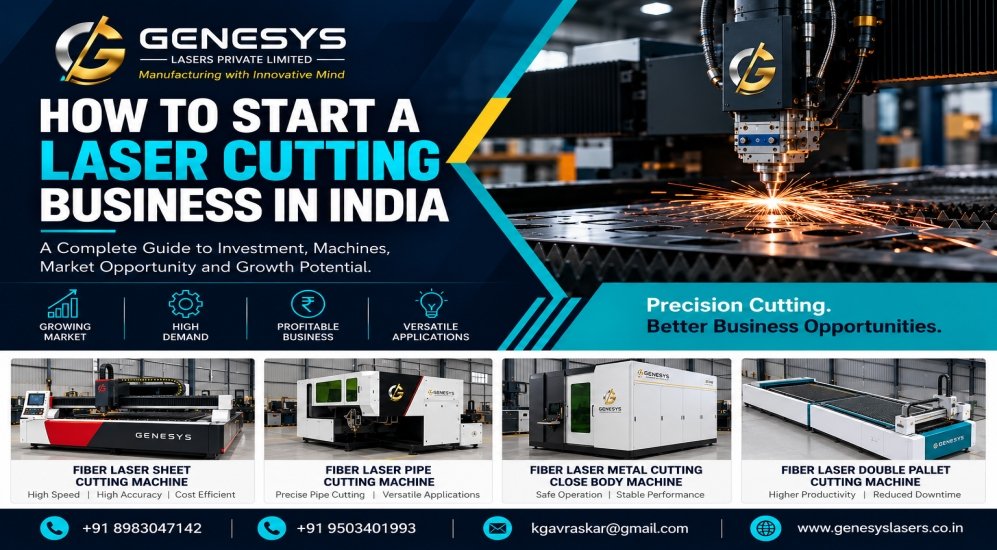
Have you ever thought about starting your own manufacturing business but weren’t sure where to begin? If you have been exploring opportunities in the industrial sector, a laser cutting business is one option worth understanding.
Laser cutting is used by manufacturers to cut metal sheets into different shapes and components. These parts are then used in products such as electrical panels, industrial machinery, furniture, automotive components and fabrication structures.
The interesting part is that you don’t necessarily need to manufacture your own products. You can also start a laser cutting job work business, where other companies send you their designs and you cut the components for them.
But before investing in a machine, there are a few important things you should understand: who your customers will be, which machine you actually need, how much it will cost to run the business and how you will get regular orders.
Let’s look at these points one by one.
1. First, Decide What Kind of Laser Cutting Business You Want to Start
Before looking at machine prices, think about the type of work you want to do. This decision will influence almost everything else, including your investment and the machine configuration you need.
Starting a laser cutting job work business
This is an option for people who want to provide cutting services to other businesses.
For example, a fabrication company may receive an order for 500 metal components but may not have its own laser cutting machine. It can outsource the cutting work to your unit. You process the parts according to the customer’s drawings and charge for the work.
Your customers could include fabrication workshops, electrical panel manufacturers, engineering companies and other businesses that regularly use metal components.
Manufacturing your own components
Another option is to manufacture components and sell them directly to businesses. This gives you more control over the product, but you may also need to manage raw materials, finishing, quality checks, inventory and delivery.
Working with regular industrial customers
Some manufacturers need the same components repeatedly. If you can meet their quality requirements and delivery schedules, these relationships may lead to repeat orders.
You don’t have to choose a business model immediately. Start by understanding what local manufacturers need and what kind of work you can realistically handle.
2. Find Out Whether There Is Demand in Your Area
One mistake new business owners can make is buying a machine first and looking for customers later.
A better approach is to speak with potential customers before making a major investment.
Suppose you are planning to set up a unit in Pune or near an industrial area such as Chakan, Bhosari or Talegaon. You could start by listing fabrication companies, engineering manufacturers and electrical equipment suppliers in those areas.
Talk to them about their requirements. What materials do they work with? What thicknesses do they regularly cut? Do they outsource laser cutting? Are they looking for a new supplier?
These conversations can help you understand the kind of work available in your market.
You should also check how many businesses already offer similar services. Find out what they specialise in, how they handle urgent orders and where customers feel existing suppliers could improve.
You may not get confirmed orders from every conversation, but you will have a much clearer picture of the opportunity before investing.
3. Choose a Laser Cutting Machine That Fits Your Work
Once you have a better idea of the jobs you want to handle, you can start comparing machines.
There isn’t one machine that is automatically right for every business. The choice depends on the materials you plan to cut, their thickness, the size of the components and the number of orders you expect.
Fiber laser cutting machine
Fiber laser cutting machines are widely used for industrial metal cutting. Depending on the machine configuration and processing conditions, they can be used for materials such as mild steel, stainless steel, aluminium, brass and copper.
When comparing machines, don’t look at laser power alone. Consider the working area, cutting requirements, components, software, installation and service support as well.
Closed body fiber laser cutting machine
If you prefer an enclosed cutting area, a closed-body machine may be worth considering. Its enclosure and associated safety systems can help manage exposure to the cutting process, depending on the machine design.
Sheet and tube laser cutting machine
What if your customers need both flat metal sheets and tubes or profiles cut?
In that case, a sheet-and-tube laser cutting machine may be suitable, provided its specifications match the dimensions and types of materials you need to process.
Before choosing any machine, discuss your actual applications with the supplier. If possible, ask for a demonstration using samples similar to the jobs you expect to receive.
4. How Much Money Do You Need to Start?
This is usually one of the first questions people ask, and the answer depends on how you plan to set up the business.
The machine itself is a major expense, but it isn’t the only one.
You also need to consider the workshop, electrical installation, auxiliary equipment, material handling, staff and money to cover day-to-day expenses.
Here are the main costs to include in your budget:
-
Machine purchase: The cost depends on the machine type, laser power, working area and configuration.
-
Workshop: Consider rent, the security deposit, layout and any site preparation required.
-
Electrical and utility requirements: Check the power supply, cooling, compressed air and other requirements for your selected machine.
-
Auxiliary equipment: Depending on the setup, you may need gas supply arrangements, material handling equipment and other accessories.
-
Employees: Budget for operators and any additional staff required for production and administration.
-
Consumables and maintenance: Cutting consumables, routine servicing and unexpected repairs can add to your expenses.
-
Working capital: Keep enough money available to cover regular costs while you build your customer base and wait for payments.
The easiest way to estimate your investment is to request a machine quotation, prepare a list of setup expenses and calculate your monthly running costs separately.
Don’t forget working capital. Even if you receive orders soon after opening, customers may not pay immediately.
5. Understand Your Running Costs Before Setting Prices
Getting orders is important, but you also need to know whether the work you accept will cover your expenses.
Imagine a customer sends you a drawing and asks for a quotation. Before deciding your price, you need to understand how much time and material the job will require.
Your calculation may include machine time, loading and unloading, setup, electricity, assist gases, consumables, labour and other overheads.
Some jobs may take only a few minutes to cut, while others may require more preparation or longer processing time. Material thickness and component design can also affect the time required.
For this reason, avoid quoting every job using the same rate without checking its requirements.
Keep track of the actual time and cost involved in completed jobs. Over time, this information will help you prepare more realistic quotations and understand which types of work suit your business.
6. How Will You Get Your First Customers?
A laser cutting machine doesn’t automatically bring orders. You need to make sure the right businesses know what you can offer.
Start with a list of potential customers in your target industrial areas. Fabrication workshops, engineering companies, electrical panel manufacturers and industrial component suppliers are possible places to begin.
Visit businesses where appropriate, introduce your services and ask about their cutting requirements. A clear explanation of your capabilities is often more useful than a general sales pitch.
You can also build a website that shows the materials you process, your machine capabilities, the industries you serve and how customers can request a quotation.
For a business selling industrial services, the website should answer practical questions. Can you process the customer’s material? What sheet sizes can your machine accommodate? Can the customer share a drawing for evaluation? How can they contact you?
You can also use referrals and relationships with other manufacturers to find potential customers.
At the beginning, focus on building trust and delivering consistent work. Repeat customers can become an important part of your business over time.
7. Prepare Your Workshop Properly
Before the machine arrives, make sure the workshop is ready for installation.
The space must suit the machine dimensions, material loading process and movement of finished components. You will also need to consider electrical supply, cooling, ventilation, fume extraction and applicable safety arrangements.
Ask the machine supplier for the installation requirements of the exact model you plan to purchase.
It is also worth planning where raw materials, finished components and consumables will be stored. A well-organised workspace can make daily production easier to manage.
Don’t finalise the layout based only on the available floor space. Check the machine’s service clearances and material handling requirements as well.
8. Take Care of Business Registrations and Documentation
The registrations and permissions required depend on your business structure, location and activities.
You may need to consider business registration, GST where applicable, Udyam registration if eligible, local permissions and relevant safety or factory requirements.
If you plan to apply for a business loan, you should also prepare a project report. This generally explains what business you want to start, what equipment you need, how much funding you require and how you expect the business to generate enough cash flow to meet its expenses.
Check the current requirements with the relevant government authorities and a qualified professional before proceeding.
9. Think About the Business Beyond the Machine
Buying a machine is only one part of setting up the business. You also need a plan for keeping it productive.
Before investing, ask yourself a few questions:
-
Have I spoken to enough potential customers to understand the demand?
-
Do I know which materials and thicknesses I need to process?
-
Have I calculated the complete setup cost and monthly expenses?
-
Can I manage the business if orders take longer than expected to arrive?
-
Do I understand the machine’s maintenance and service requirements?
-
Have I planned how to find customers and build repeat business?
These questions may seem basic, but answering them honestly can help you avoid making decisions based on assumptions.
There is no guaranteed profit or fixed payback period for every laser cutting business. The outcome depends on the investment, order volume, pricing, machine utilisation and operating expenses.
Frequently Asked Questions
Is a laser cutting business a good option for beginners?
It can be worth exploring if you understand the local manufacturing market and are prepared to manage production, customer relationships and operating costs. Researching demand before purchasing a machine is a sensible first step.
Can I start with a laser cutting job work business?
Yes, job work is one possible business model. You provide cutting services to customers who outsource their component processing. Your machine and pricing should match the work those customers require.
Which laser cutting machine should I buy first?
Start with the applications you want to handle. Consider material type, thickness, working area, expected production volume, installation requirements and after-sales support before selecting a machine.
What expenses should I consider besides the machine price?
Include workshop costs, electrical and utility requirements, auxiliary equipment, staff, consumables, maintenance and working capital in your budget.
How can I find customers for my laser cutting business?
Start by contacting manufacturers and fabrication businesses in your target area. A professional website, industrial networking, referrals and consistent service can also help you build relationships with potential customers.
Final Thoughts
Starting a laser cutting business takes planning, and most of that work happens before the machine is installed.
Spend time understanding your market, speak with potential customers and calculate the full cost of setting up and running the unit. Once you know what kind of work you want to handle, it becomes easier to compare machines and decide which configuration makes sense for your requirements.
If you are planning to start a laser cutting business, Genesys Lasers can help you explore machine options based on your applications, material requirements and production needs.
Visit the Genesys Lasers website to learn more about its industrial laser cutting solutions or contact the team to discuss your requirements.